Paracetamol Doesn't Help Lower-Back Pain or Arthritis, Study Shows
Denis Campbell, guardian.co.uk | Updated: April 01, 2015 17:06 IST
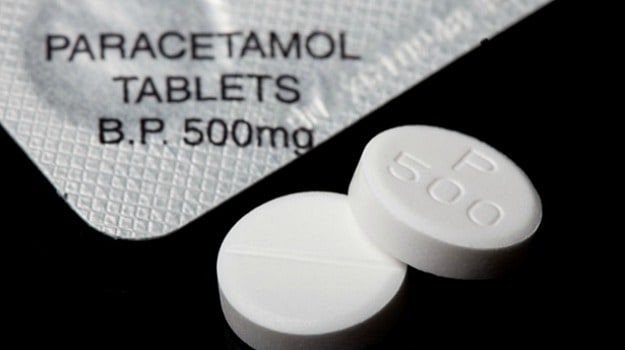 Some are calling for doctors to stop prescribing paracetamol for back pain and arthritis. Photograph: Alamy
Researchers
want doctors to rethink endorsement of the drug, which they say is no
more effective than a placebo for these conditions.
Paracetamol does not relieve back pain and offers almost no help to
people with arthritis in their hips or knees, according to research. The
findings have led to calls for doctors to stop prescribing the
painkiller, which is commonly used to treat those conditions.
"Paracetamol is ineffective in the treatment of low back pain and
provides minimal short-term benefit for people with osteoarthritis,"
concludes the study, which is published in the British Medical Journal.
"These results support the reconsideration of recommendations to use
paracetamol for patients with low back pain and osteoarthritis of the
hip or knee in clinical practice guidelines," the authors add.
An estimated 10 million Britons are affected by pain, with the
condition believed to lead to the loss of many millions of working days,
including some 4.9m a year from work-related back pain. The findings
have put pressure on the National Institute for Health and Care
Excellence (Nice), which advises the NHS on what treatments are
worthwhile.
Nice caused controversy last year by
continuing to endorse the use of paracetamol for osteoarthritis, despite
concerns about its effectiveness and safety. However, when it was
updating that clinical guideline, the Medicines and Healthcare Products
Regulatory Agency began a review into the safety of over-the-counter
medicines generally, including paracetamol.
Nice has
therefore decided to wait until the MHRA has finished before looking
again at the evidence for how drugs, including paracetamol, can
potentially relieve the pain of osteoarthritis. It also advises that
patients with sore hips or knees caused by arthritis should use physical
activity and exercise, and seek to slim down if they are overweight or
obese, to relieve their condition.
The institute also
currently recommends the analgesic as a treatment for lower back pain.
However, its guideline containing that advice is being updated as part
of an ongoing review process. "As for any guideline update, any new
relevant evidence that becomes available will be taken into account as
part of the update," the spokeswoman added.
The research
says that the evidence to support Nice's recommendations is weak and
inconsistent, and that there may be safety issues from taking the
recommended full dose of paracetamol, which is up to 4,000mg a day.
It was led by Gustavo Machado, from the George Institute for Global
Health at the University of Sydney. He and his team reviewed 13
randomised controlled studies which had looked into the safety and
effectiveness of paracetamol for lower back pain and osteoarthritic
pain.
"'High-quality' evidence shows that paracetamol is
ineffective for low back pain ... We also found 'high-quality' evidence
that paracetamol increases the risk of having an abnormal result on
liver function tests by nearly four-fold, although the impact of this on
clinically relevant patients is unclear," they say.
With
osteoarthritis, "our results show only a small, clinically irrelevant
benefit of paracetamol for pain and disability at short-term follow-up",
the authors add. In addition, large doses of the painkiller - above
4,000mg a day - can produce dangerously large amounts of a toxic
metabolite, which can lead to liver failure.
The
researchers want doctors and those who draw up clinical guidelines to
rethink their endorsement of paracetamol, which they say is no more
effective than a placebo. Exercise, especially strengthening exercises,
may be just as effective as the painkiller for both conditions, they
say.
"Our results therefore provide an argumnent to
reconsider the endorsement of paracetamol in clinical practice
guidelines for low back pain and hip or knee osteoarthritis.
"We found that paracetamol is ineffective on both pain and disability
outcomes for low back pain in the immediate and short term and is not
clinically superior to placebo on both pain and disability outcomes for
osteoarthritis," they add.
The Royal College of GPs and
Royal College of Physicians, which represents hospital doctors, did not
respond to requests for a response to the findings.





















 Disclaimer: